Showing posts with label Waipu. Show all posts

Friday, 21 May 2021

Paradise in Waipu


This is my latest article, published in Motorhomes, Caravans & Destinations Magazine

Scottish immigrants found an ideal setting in Waipu; locals and holidaymakers feel the same way. Heather Whelan discovers more about this idyllic Northland town

Whelan_18 At the Waipu Pancake Rocks.jpg

The small Northland town of Waipu is unique in that it was settled entirely by Scottish Highlanders, followers of a controversial minister, Norman McLeod. Back in 1817 the group fled from clearances and famine in their homeland and formed a community in Nova Scotia. This thrived until the 1840s, when cold winters and crop failures drove McLeod and some of his followers to leave for Australia. Here they had more bad luck, and they eventually continued to New Zealand. Settling in Waipu, they finally found the haven they were seeking. About 1000 family members and friends joined them from Nova Scotia, and the group became a tight-knit, Gaelic-speaking community.
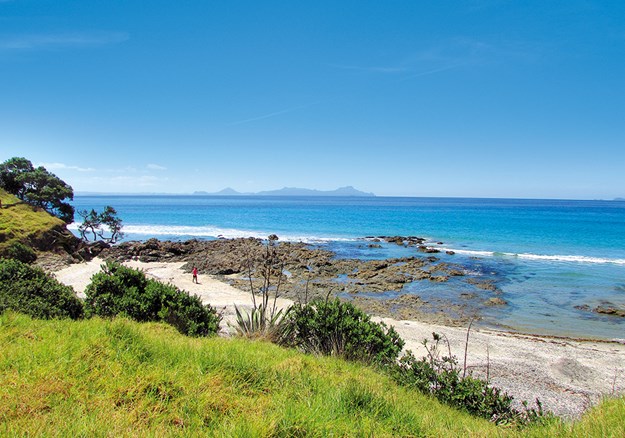
Whelan_15 Bream Bay views on the coast walk.jpg

SCOTTISH TRADITIONS

You can’t visit Waipu without being aware of the highland heritage. The town centre is dominated by tall memorials showing the pioneering ships and listing the settlers’ clan names. The adjacent museum sports a large sign of the serious-looking Rev McLeod, and visitors can learn all about the unique settlement. Descendants of the original families who are interested in genealogy will find all the information they desire – and there’s plenty to interest the non-Scots among us too. The museum boasts a UNESCO award and an international reputation.

Whelan_2 Memorials to the Scottish settlers.jpg

Waipu is famous locally for its Highland Games, held on New Year’s Day since 1871 – until Covid-19 put a damper on things. This year the town couldn’t hold the normal shindig: a day-long celebration with pipers, drummers and fiddlers, highland dancing, and shows of strength with tug-of-war teams and caber tossing. However, it did host a market day with stalls along the street and in the Caledonian Barn, and a family carnival at the adjacent park.

I wandered around the market stalls until I was drawn to a little stage where children were competing in Scottish dancing competitions. It’s not every day you see tiny boys in full Scottish costumes! Past the food stalls a group of steampunk enthusiasts had managed to combine Victoriana with tartan. Who could have imagined steam-powered bagpipes?
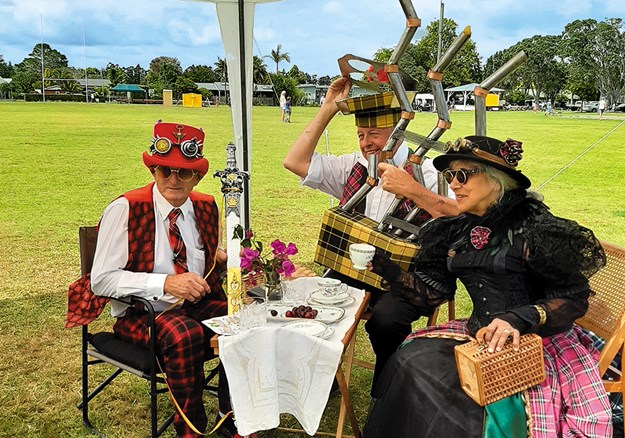
Whelan_7 Steampunk meets Scotland.jpg

ART ’N TARTAN

Also on display were some of the creations from previous Art ’n Tartan shows – the town’s wearable art extravaganza. Usually held in mid-winter, the event will be in October this year. It draws competitors from all over the country, and should be even bigger and better this year as it was cancelled last year, again due to Covid-19. The organisers believe the creative entrants will have used the lockdown to work on their designs.

Whelan_8 Art _n Tartan.jpg

Waipu is home to lots of artistic folk. Tucked in among the street stalls is the Old Garage, where I couldn’t resist buying a print by Patsy Montgomery, one of the artists who had work for sale inside. The picture showed tui flying above the river mouth, with Hen/Taranga Island on the horizon. You can see this stunning view on the road between Waipu and Waipu Cove, a short drive away.

COASTAL PARADISE

The Waipu river mouth and estuary are a haven for birds; there’s a wildlife refuge that’s a nesting area for the New Zealand dotterel, variable oystercatcher and fairy tern. Other protected, threatened or rare species visit the area, including the banded dotterel, reef heron, wrybill and Caspian tern. Waipu Cove is buzzing in summer, but the reserve and estuary areas are quieter – a birdwatcher’s paradise.
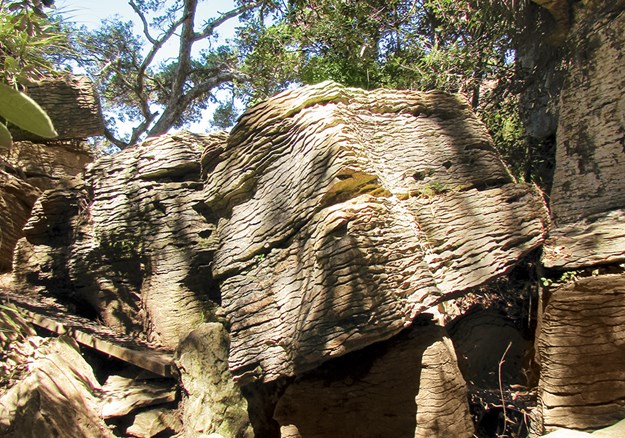
Whelan_17 Rock formations at Waipu Cove.jpg

The cove has a long sandy beach with a campground behind the dunes. There’s a traditional little store and, across the road, the Cove Cafe overlooks the beach. I recently had a long lunch with friends there and can thoroughly recommend it. For those who don’t have time to visit Waipu Museum, a look at the impressive murals on the toilet block will provide a quick history lesson. The beach is safe for swimming; it’s patrolled by lifeguards every day during the holiday period and on weekends between Labour Day and Easter. At the southern end, a shallow tidal creek overhung by pohutukawa is a favourite spot for littlies to splash around and build sand castles.

PANCAKE ROCKS

Across the creek there’s the start of one of our favourite walks – to Waipu’s own ‘pancake rocks’. This track has been created and maintained by the local Lions Club and takes walkers through magnificent coastal scenery. In some parts there are ancient pohutukawa forests, and the views across Bream Bay to the Hen and Chicken Islands and the Whangarei Heads are stunning.

The most fascinating features of the walk are the pancake rocks, similar to the famous ones at Punakaiki. These limestone outcrops, dating back 36 million years, have weathered to the unusual stack-of-pancakes shape after being exposed to the elements. Unlike at Punakaiki though, Waipu’s rocks are never crowded with tourists, and they are unfenced: in some places the track goes through and over them.
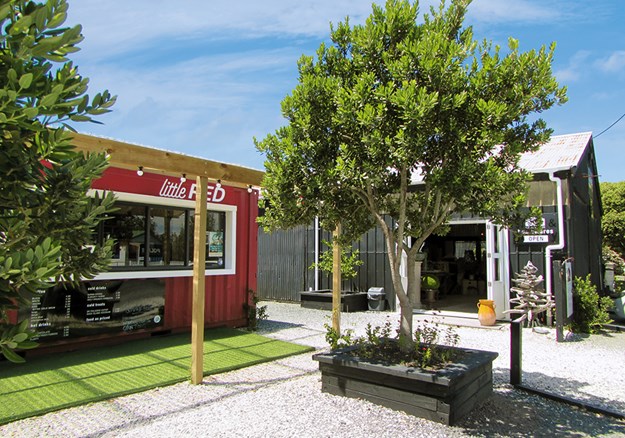
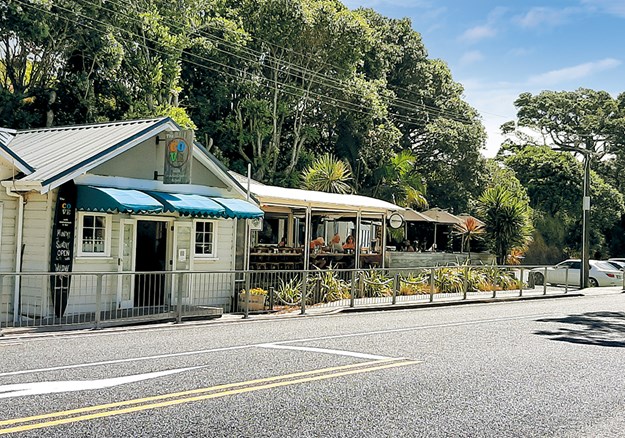
Whelan_10 Waipu shopping.jpg

Whelan_14 Coastal dining.jpg

SHOPPING AND DINING

The township is fun to explore. As well as the supermarket, hardware store, butcher and chemist, there are antique and op shops to rummage through. Goody Goody Deli and Cafe, rebuilt after a fire a couple of years ago, is better than ever. Across the road there are a couple of summertime pop-ups, Little Red Coffee and the Black Barn Homewares store.
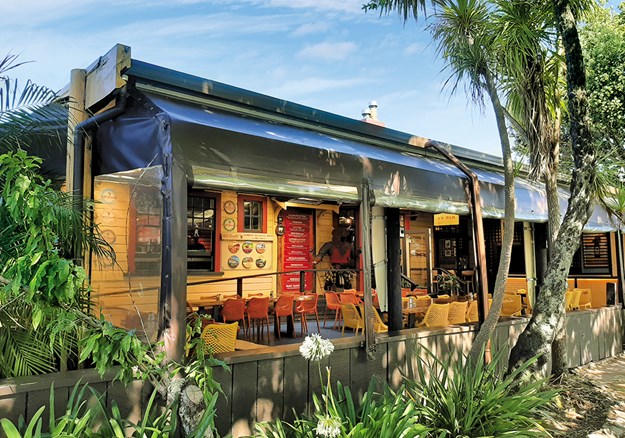
Whelan_3 McLeod_s Pizza Barn.jpg

In the evening McLeod’s Pizza Barn and Brewery is the place to eat. In what was once the town’s post office, you can sample a range of hand-made pizzas and award-winning beers, including Black Watch Imperial Dark Ale and (of course) Paradise Pale Ale.
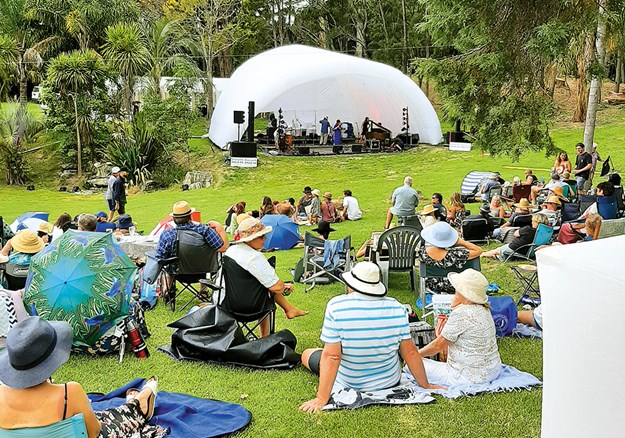
Whelan_20 Jazz Festival at Waipu Cove.jpg

FIND OUT MORE

  • Waipu hosts lots of markets. Street markets are held on Easter Saturday and the Sundays of Auckland Anniversary, Queen’s Birthday and Labour Weekend. Antique markets are also held on these Sundays. Boutique markets are held the second Sunday of each month, with crafts, food and music.
  • The town has plenty to offer music lovers, especially during summer. We recently enjoyed an afternoon of jazz at a farm overlooking Waipu Estuary, and a Scottish folk music duo at the church hall.
  • The Waipu Cove walkway is a 2km track taking about 1.5 hours to Waterman Drive. There’s an extension to Ding Bay that takes a further 45 minutes.
  • Information about camping at Waipu Cove: campwaipucove.com. There’s a DOC campground at Uretiti, o SH1, 5km north of Waipu. Caledonian Park has an area for motorhome parking, with powered sites and an honesty box.
  • Details of the museum opening times and prices: waipumuseum.com

Sunday, 22 December 2019

Camping on the DOC of the Bay

This is my latest article published in Motorhomes caravans & Destinations Magazine

Looking for a DOC campground by the beach in Northland? From Tāpotupotu Bay in the Far North to Uretiti, south of Whāngārei, Heather Whelan finds the best spots.

Whelan_5-On-the-track-from-Tapotupotu-Bay---to-Cape-Reinga.jpg

New Zealanders are fortunate in that they can visit and stay in beautiful parts of the country run by the Department of Conservation (DOC).Northland has possibly more than its fair share of DOC campgrounds in pretty bays and beside gorgeous beaches. Most are accessible to motorhomes and are an excellent base for outdoor activities, or just chilling out and relaxing.

Away from it all in the Far North

Alt TEXT HERE
Tāpotupotu Bay
When my partner Malcolm and I visited Tāpotupotu Bay, DOC’s most northerly campground, we loved the sense of being so far from the hustle and bustle of town and city life. Although it was close to Cape Reinga, where tourists thronged, Tāpotupotu Bay was quiet.

While day visitors might come and go, it was only those campers who, like us, enjoyed the remoteness of the site and the pristine natural beauty of the area who stayed overnight or for longer. We parked on the grass beside the beach and drank in the scene - sandy beach, sparkling water, a shallow lagoon, and bush-clad headlands standing guardian at either end of the bay.

The location is popular with those who like boating, fishing and diving. There was enough swell for a group of young campers to enjoy some surfing. I decided to swim in the more protected water behind the dunes, where the stream widened to become a lagoon.

For us, one of the attractions of Tāpotupotu Bay was that it was right on the Te Paki Coastal Track. One morning we walked part of the track, which took us along cliff tops to Sandy Bay and up to Cape Reinga. The views along the coast were stunning, and Cape Reinga had a spiritual quality.

We stood watching the rippling line of foamy surf where the waters of the Pacific Ocean and the Tasman Sea met and mingled. Nearby, an ancient pōhutukawa clinging to a headland marked the place where the spirits of the dead are thought to enter the underworld.

Birdwatchers’ paradise

Alt TEXT HERE
Rarawa Beach
Another remote Far North DOC campsite worth a visit is Rarawa Beach. It is a short walk from the campground to the beach, past a stand of pine trees and along a sandy track through the dunes. The dunes are home to dotterels and variable oystercatchers during their breeding season (August to March), so it is important to look out for their nests and to give the birds a wide berth.

The dazzling white sand of Rawara Beach seems to stretch forever. We explored the stream mouth and fossicked along the high-tide line. The beach is popular with swimmers, though rips can form, and those who are not confident may prefer to take a dip in the lagoon that forms at the stream mouth. Fishermen surf-cast at low tide, while small boats and kayaks can be launched from the beach.

Bushwalks and fishing galore

Alt TEXT HERE
Puriri Bay campsite
A little further off the beaten track (and don’t let the name 'Bland Bay' put you off), the Puriri Bay (Whangaruru North Head) DOC campground is a gem. Nestling beneath bush-clad hills and with views across the Whangaruru Harbour, the area is anything but bland. On a particularly hot day, it was wonderful to head into the cool of the bush above the camp and walk one of North Head’s tracks.

The path meanders uphill and along the cliffs on the seaward side of the peninsula that separates Whangaruru Harbour from Bland Bay and the ocean beyond. After dropping down to some secluded bays, the path turns inland, and we made our way over a boardwalk through reedy wetlands.

Then it was back through more forest before we found ourselves looking down on Admirals Bay, a pretty beach on the harbour. From here, it was a wander through farmland and back to Puriri Bay. The camp is a great place for fishermen - we were impressed to see a kayaker load a huge snapper into his chilly bin. The water was calm and great for swimming. And at night kiwi could be heard in the bush. Not so much bland as blissful.

Lots to do in the Waipū area

Alt TEXT HERE
Fun at Piroa Falls
For a change from these remote beaches, we spent some time with friends at Uretiti Beach. This is a popular campground, among trees and dunes, about 30km south of Whāngārei and close to the little town of Waipū.
Some campers choose Uretiti because to the south of the camp is a naturist beach, although there is plenty of space to the north for those not looking to get an all-over tan. Waipū has shops, cafés and a museum that tells the story of the Scottish settlers who made the area their home. Inland are the Waipū Caves and a popular swimming spot at Piroa Falls.

Plenty more to explore

Alt TEXT HERE
Mimiwhangata
There are several other DOC campgrounds in Northland that have beautiful beaches, great swimming and pretty bushwalks. We have enjoyed spending time at Maitai Bay and Otamure Bay at Whananaki. All campgrounds have vehicle access for motorhomes, and the DOC/NZ Motor Caravan Association (NZMCA) campsite pass can be used except in midsummer (December 20 to Waitangi weekend). 

Mimiwhangata Coastal Park, about an hour's drive from Whāngārei, is another place we love to visit - but by car, as the road is windy, steep and unsealed. The campground here isn’t accessible to vehicles; campers have to carry gear over the hill from the car park. But, for a day trip, Mimiwhangata has it all – beautiful sandy beaches, bush walks and a longer loop track around the headland. Last time we were there, the pōhutukawa trees were in fiery flower - a picnic lunch in a perfect spot, courtesy of DOC Northland. 


FIND OUT MORE

  • The DOC website has full information on its campgrounds, including details about access, facilities and costs, doc.govt.nz
  • The CamperMate mobile phone app and the NZMCA travel app also provide helpful information.
  • DOC has two types of pass worth investigating — the campsite pass for rental campervans and the DOC/NZMCA pass (details on the NZMCA website, nzmca.org.nz).