Showing posts with label gardens. Show all posts

Wednesday, 29 May 2024

Ngatea Water Gardens

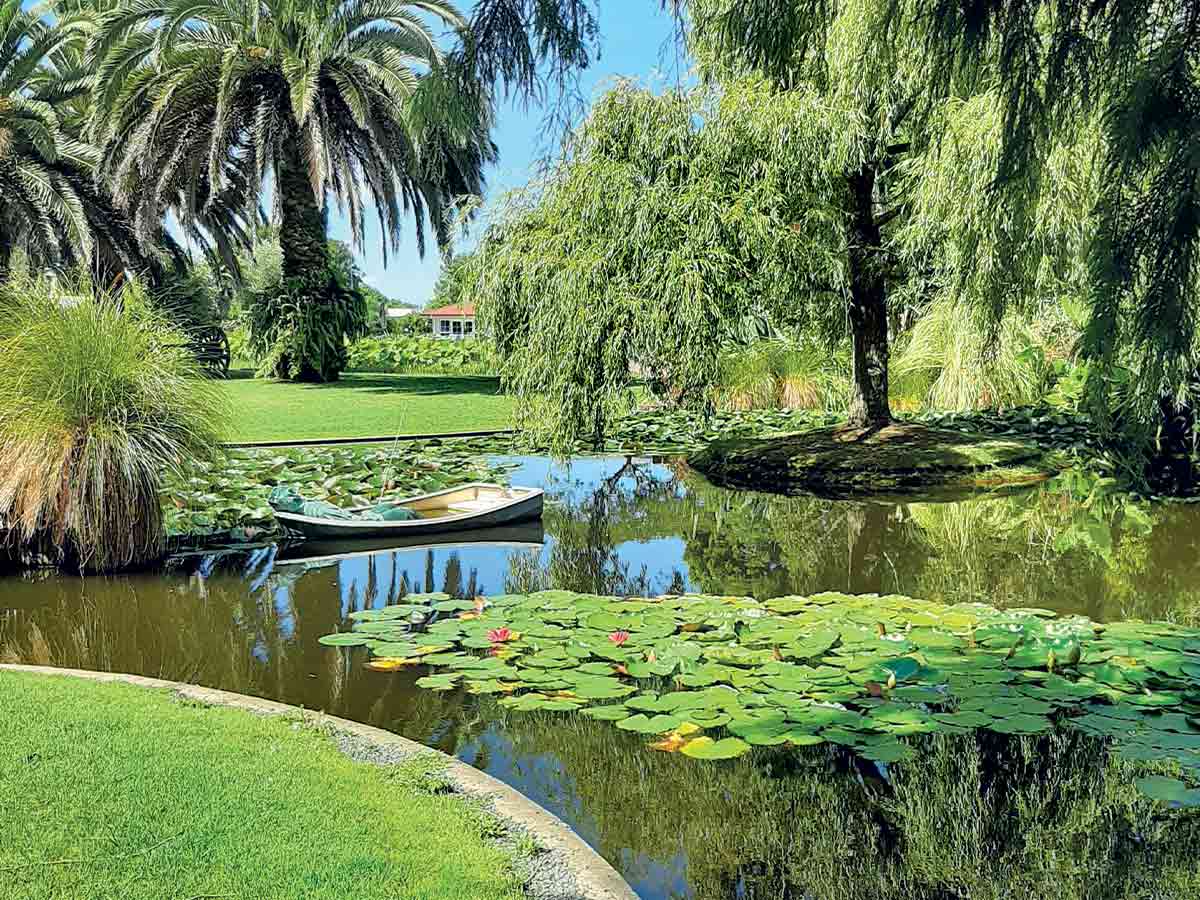
 Ngatea Gardens

Ngatea Gardens: a water wonderland

Heather Whelan has long had Ngatea on her ‘must-visit’ list. Coromandel Peninsula is a favourite spot to visit but stopping off along the way has been sidelined for her last few trips, until now.

We’d been meaning to stop at Ngatea for some time – the cafés along the main street always look tempting – but usually, we’re heading to, or from, the Coromandel Peninsula and hadn’t considered Ngatea as a destination in its own right.

However, after visiting the Ngatea Water Gardens and exploring the town, we can wholeheartedly recommend it as a stop. There’s even freedom camping right in the town centre at the Hauraki District Council car park.

Weird and wacky water gardens
Ngatea Gardens
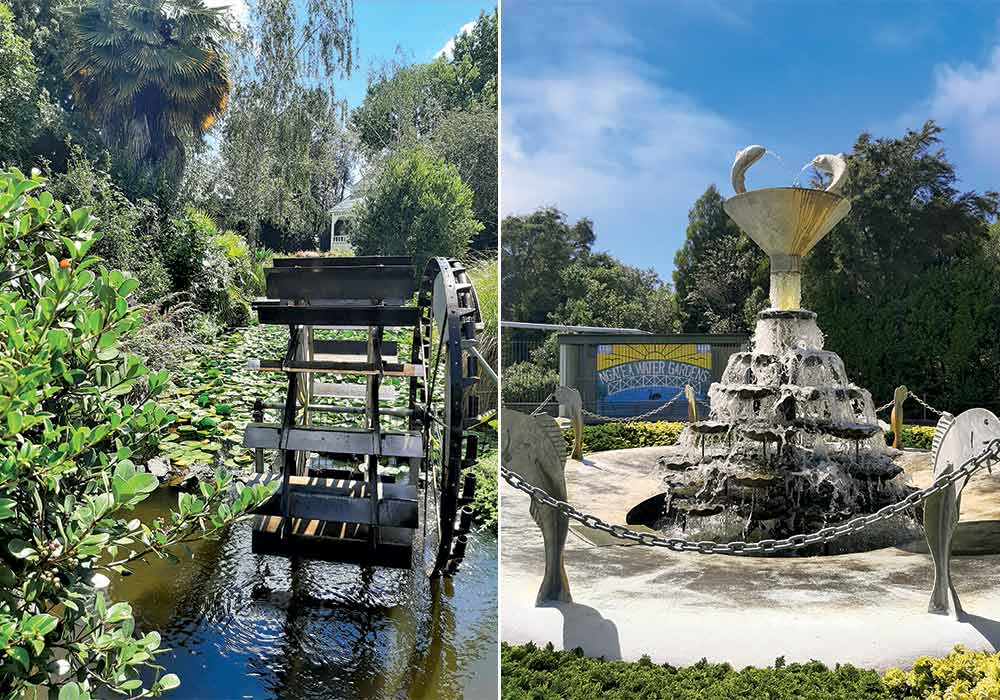
Left: Waterwheels and water features are part of the joy of this wonderland
Right: Magical fountains are dotted around the property

The Water Gardens are tucked away behind Ngatea’s main street. As we pulled into the car park, we got the first inkling of what was in store for us. Our space was reserved for ‘wizards, oil refiners, and unemployed miners’. Every other parking space had the same quirky kind of signage. The creators of the gardens, Roger and Emma Blake, obviously have a sense of humour. At every turn throughout the two hectares, there’s something to make you smile.

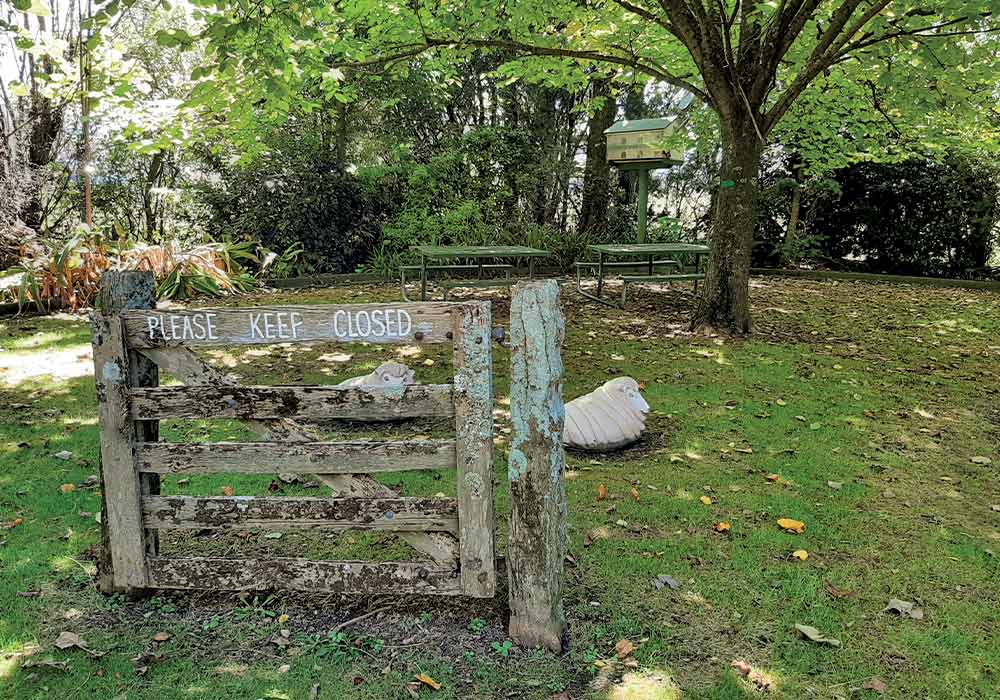
Paths led us over bridges, past lily ponds, water wheels, and fountains, beside a castle and above a waterfall. Everything was lush and flowers bloomed. Unlike conventional gardens, though, we came across things such as parking meters in a lake. They had the instruction, ‘boat parking only.’ Another sign warned of a ‘fork in path ahead’. Sure enough, there was a garden fork cemented in. ‘Please close the gate’ said the notice on the gate sheltering ‘sheep’. Of course, there was no fence attached to the gate. There were lots more amusing signs, but I won’t spoil things by relating them all – I’m sure you’ll want to visit and discover them for yourself.

A mammoth undertaking
Ngatea Gardens
Quirky features are part of the picturesque appeal

It’s hard to realise that back in 1995 when Roger and Emma started work on the gardens, there was nothing but bare paddocks at the property. They had little gardening experience, but they had a dream – and the drive to create it. Roger borrowed his father’s excavator and dug out 5000 cubic metres of clay to form the four ponds. This clay, together with topsoil, contoured the surrounding areas. Later, tonnes of greywacke rocks were delivered. Roger built the waterfall with 200 tonnes of them, which he set into concrete to form the waterfall. This pumps 100 litres of water per second, which cascades down into one of the ponds.

Underground services were installed (power, irrigation, and lighting) and area by area, the gardens were planted. Roger built the large structures, such as the castle, barn, and bridges, himself, although, the couple had help from family and friends. After all, this huge project was done after work and on weekends. Ngatea Water Gardens opened to the public in 1998, just three years after starting the enterprise.


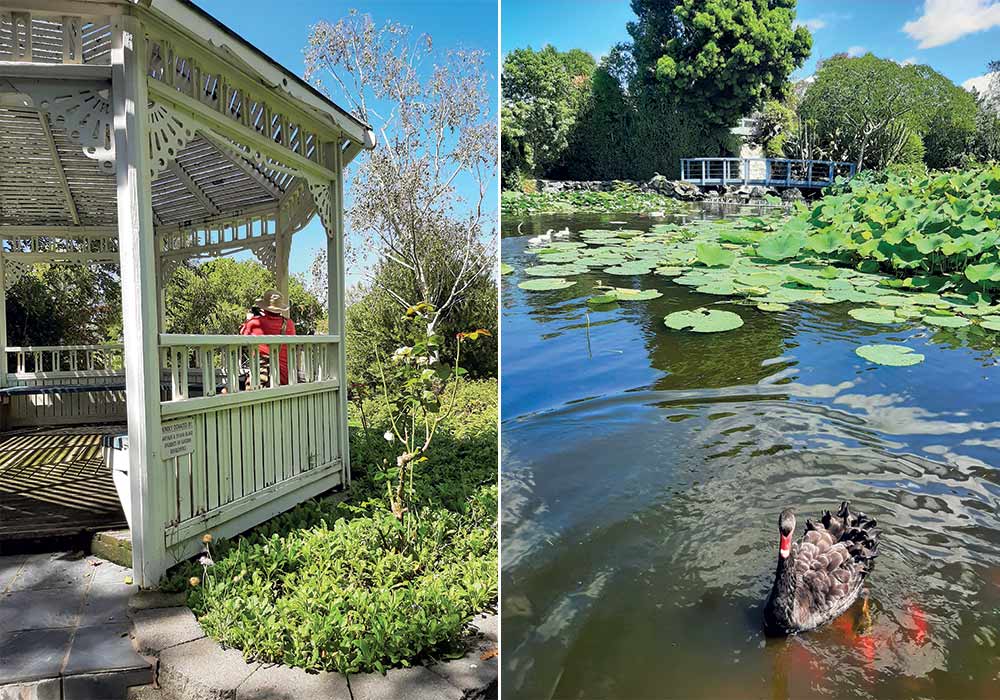
Now well established, the gardens boast splendid mature trees and shrubs. In the ponds, you’ll see water lilies and lotus, which are home to goldfish, ducks, and black swans. Peacocks parade on the lawns and bees buzz among the mesmerising array of flowering plants. There are also some ancient turtles, believed to be among the oldest in New Zealand.

Arthur’s Canny Museum

Ngatea Gardens
Thousands of drink cans line the walls

While it looked like a humble garden shed from the exterior, it’s fair to say that stepping inside took us by surprise. Inside were seemingly endless rows of drink cans, much like a kaleidoscope for the eyes. Featuring more than 10,000 different drink cans, this unique museum is New Zealand’s only collection of beverage cans of this scale on display to the public. Information in the museum explained that Roger’s late father, Arthur, picked up a beer can from the roadside one day and so started this collection. It was interesting to peruse the different beer, soft drink, and unusual cans; the oldest was 50 years old and there were many fascinating ones from overseas.

A history of excavation
Ngatea Gardens
Left: A great spot for photographing the ducks
Right: Lakeside tranquillity

It’s apt that the Blake family constructed water gardens at Ngatea because water and digging are central to Ngatea and the Hauraki Plains area. Early in the 20th Century, people drained the peat swamp, bog, overflowing rivers, and Kahikatea forests so they could farm the land. The first drains and stop banks were hand-dug. There’s a sculpture named Plains Pioneer by Paul Dibble commemorating these drain diggers in Pioneer Park in the town centre. Nowadays, there’s a vast network of canals, drains, floodgates, and pumping stations that keep the land from being inundated.

Early travel in the area was by water, but as roads were built, a bridge was needed at Ngatea. A unique central lift span bridge was constructed in 1917, linking both sides of the Piako River. Until they replaced it in 1960, the bridge served as a landmark in the area. To celebrate the start of the new millennium, a half-scale working replica of the bridge’s central span was constructed in the Tilbury Reserve, beside the river.

In Aunt Daisy’s footsteps
Ngatea Gardens
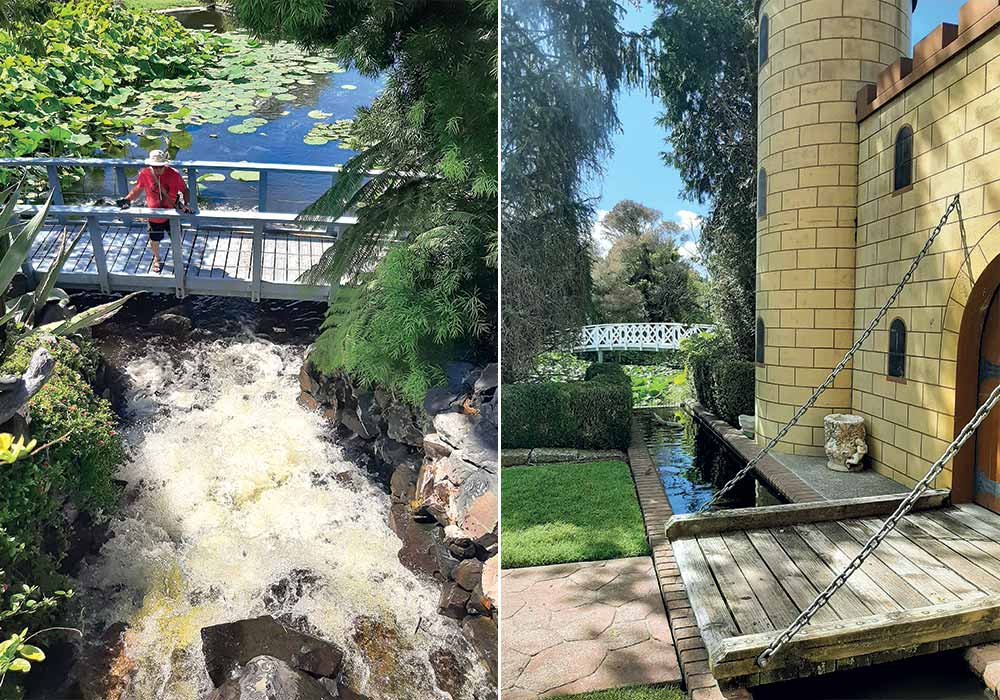
Left: Waterfall views
Right: The castle, moat, and drawbridge at the heart of the property

One engineer who worked for the Hauraki Plains Council was Frederick Basham. His wife, Maude, who became better known as Aunt Daisy, began her radio career when they lived in Ngatea. Her popular radio programme made her a star of the domestic. She became a celebrity food writer, with her cookbooks running to several editions – 2010 saw one on its 22nd reprint.

Ngatea has obviously taken heed of its famous cook and baker. I’d spotted half a dozen cafés in the little town. We couldn’t sample them all (this time) but had morning tea at The Glory Company, where the Aunt Daisy tradition continues with great coffee and baking.

Year-round delight
Ngatea Gardens
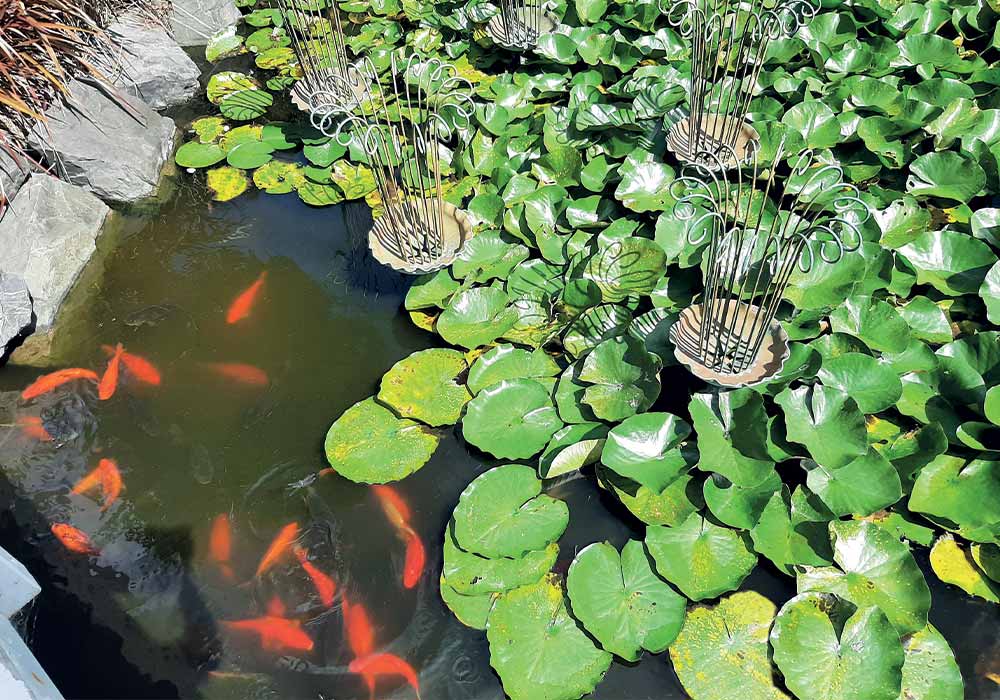
Goldfish galore

Ngatea Water Gardens has been cleverly planted to offer year-round visual delights, and there’s no doubt that it’s a fun place to meander and explore. Winter hours kick in from 1 May, where the usual Sunday to Thursday opening hours are limited to Sunday only, through until 1 October, so if you’re planning to travel and explore, consider this to avoid disappointment. It’s a wonderful spot to spend time for all ages and there’s a wheelchair-friendly path through the gardens.

Sunday, 26 July 2020

Go Gisborne!

This is my latest article, published in Motorhomes, Caravans & Destinations

From soaking in hot springs to cycling adventures and adrenalin-fuelled rock sliding, there’s something for everyone in Gisborne
nzmcd go gisborne Whelan_10 On the Wainui-Makorori Headland.jpg
On the Wainui Makorori Headland

It was 8.15am when my partner Malcolm and I arrived at the railway line at Muriwai, just south of Gisborne, and the day was already hot. We were all set for a cycling adventure on Gisborne Railbikes, a unique concept thought up by Geoff Main, the director and driving force behind the venture. Geoff greeted us and showed us our bikes, which sit side by side, rigidly connected and attached to the rails. The other cyclists on today’s ride had chosen the e-bike option but we were happy with standard bikes, which came complete with a basket at the front and packs behind to carry whatever we’d brought for morning tea.
The 16km section of disused railway line took us through a bush-filled valley, over wooden bridges that spanned rivers and roads, before reaching the first tunnel. Geoff checked we had our lights switched on and we pedalled into the darkness. Then it was back into the sunshine again before entering another tunnel, finally emerging at the coast. We cycled along, admiring views from cliffs 140 metres above sea level, before reaching the end of the line. Literally. Stormy weather had caused a slip that left the track twisted and suspended in mid air. After taking photographs of the dramatic sight, we retraced our route for a few minutes to the picnic spot. Geoff produced chairs from a shed beside a grassy area and we ate our snacks while enjoying the sea view.
nzmcd go gisborne Whelan_5 The bikes were easy to use.jpg
The bikes were easy to use
Geoff hopes that in the future riders will be able to take the rails all the way to Wairoa but for now the ride is a there-and-back-again trip. Going back was fun, we’d barely noticed the slow incline on the outward journey but the return trip was definitely downhill – we hardly needed to pedal at all. Four hours after leaving we were back at Muriwai, having enjoyed a really unique experience.
nzmcd go gisborne Whelan_3 Clifftop views.jpg
Clifftop views

Historic Gisborne

Gisborne City began its life as a commercial centre in 1831 when 23-year-old John Harris set up a trading post. Soon the port was thriving, as local Maori grew potatoes, flax and wheat for export.
Maori had sailed from Polynesia and settled in the area more than 650 years ago, naming their new home Turanga. Links to their seafaring heritage can be seen at the small harbour on the Esplanade where two double-hulled sailing waka are moored. The Tahitian waka Fa’afaite is in Gisborne following last year’s Tuia celebrations, while the waka hourua Tairāwhiti offers cultural and sailing trips. This is on the bucket list for our next visit.
Gisborne is famously the first place in the world to see the light of the new day. It is also famous for its surf beaches, having some of the best breaks in the country, but for non-surfers there are lots of other options, such as parks, walkways and cycle paths.
The i-SITE has plenty of brochures – we found a short walk in one that took us to the top of the Wainui-Makorori headland. We didn’t get there early enough to see the sunrise but we did have great views, especially to the south over Wainui Beach to Tuahine Point and Young Nick’s Head.
We also strolled along Gisborne’s palm tree-lined main street, Gladstone Road, towards the art deco clock tower, with a stop for lunch at one of the many cafes and a lengthy peruse through the bookshop.
go gisborne Whelan_15 Entering 'the Cathedral'.jpg
Entering ‘the Cathedral’

Beautiful Botanics 

There are more walks at Eastwoodhill, New Zealand’s National Arboretum, a 30 minute drive from Gisborne. The arboretum boasts more than 25kms of walking tracks looping around its 100 hectares, allowing visitors to discover over 3500 different trees, shrubs and climbing plants. The arboretum is home to the largest collection of Northern Hemisphere trees south of the equator as well as many species of native and exotic birds.
The arboretum began in 1910 when Douglas Cook bought the farm he called Eastwoodhill. Cook spent the next 50 years expanding the plantings before selling the arboretum to H B (Bill) Williams. The Williams family gifted Eastwoodhill to the people of New Zealand and it is now administered by a trust.
We picked up a map in the visitor centre and decided to follow the 3km purple walk (the six trails have coloured leaf signs to keep you on track). This took us along some of Eastwoodhill’s higher ground and gave great views of the arboretum. As the track zigzagged down we came to a Canadian-style cabin with a sign that told us that it had been used as accommodation for naturists in the past, and that Douglas Cook used to keep a supply of sherry here, so his guests could stop for a glass on their walks.
nzmcd go gisborne Whelan_14 Magestic trees at Eastwoodhill.jpg
Magestic trees at Eastwoodhill
In one place there was an area where the tall trees were cathedral-like and, we discovered, this was what Cook had in mind when he planted the cypress and eucalyptus trees here. During a visit to England in 1936 Cook took note of the outline and proportions of Westminster Abbey. On his return to Eastwoodhill he planted cypress and eucalyptus to represent a cathedral. By the 1950s the foliage drooped to ground level, creating an enclosed private space. The trees were planted too closely and the effect is now lost, though the area still has a spiritual feel. One tree that formed a pillar in ‘the cathedral’ is, at 53 metres in height, the tallest tree at Eastwoodhill.
Close to the visitor centre is Eastwoodhill’s Fibonacci spiral. Constructed from volcanic rock and limestone, the spiral radiates out from a 750kg rock ball that floats in a pool. Water pressure eliminates friction, which means the ball can be rotated easily.
nzmcd go gisborn eWhelan_9 Gisborne street art.jpg
Gisborne street art
nzmcd go gisborne Whelan_8 The waka Fa'afaite with Tairawhiti in the background.jpg
The waka Fa’afaite with Tairawhiti in the background

Free fun 

If you turn right when you leave Eastwoodhill and drive about 10 minutes further along the Wharekopae Road there’s a sign for Rere Falls. This pretty waterfall is not high but it is wide – and when there is plenty of water pouring over it you can walk behind the cascade. There’s a swimming hole and picnic area too – but we didn’t stay long because we wanted to see the ‘world famous in New Zealand’ Rere Rockslide, just a little further up-river.
go gisborne Whelan_17 Rere Falls.jpg
Rere Falls
This natural playground is composed of a 60-metre-long mossy and slippery waterslide, smoothed by the waters of the Wharekopae River that flows over it and empties into a pool at the bottom. If you’re adventurous you can grab a lilo, boogie board or inner tube and ride the waterfall. We were content to just watch the happy folk slithering down and splashing into the pool, then rushing back up for another turn. It was obviously the best free fun for miles.

Relax in seclusion 

We prefer our water activity to be a bit more sedate so, when we left Gisborne, we stopped at the Morere Hot Springs on SH2 where, after walking through shady palm-filled rainforest we relaxed in the hot pools.
Morere’s water has been called ‘fossilised sea water’ because of the length of time it has been underground before bubbling to the surface. Visitors have enjoyed calming, therapeutic soaks at Morere since the 1890s and it’s quiet, green ambience was the perfect end to a fun filled, but tiring, exploration of Gisborne.
nzmcd go gisborne IMG_0432.jpg
Morere Hot Springs

FURTHER INFORMATION

Useful websites with details about the places mentioned in this story: railbikeadventures.co.nz; eastwoodhill.org.nz; wakavoyagers.com; morerehotsprings.co.nz
Gisborne i-SITE Visitor Information Centre is at 209 Grey Street
NZMCA members can stay at the park at 7 Pacific Street, Awapuni, Gisborne, and there are several motor camps and POPs in the area, including one at Rere, near the Falls. Self contained motorhomes can stay at Eastwoodhill Arboretum for a fee of $10.

Saturday, 23 November 2019

Whangarei's Hidden Delights

An article published in Motorhomes caravans and Destinations Magazine
Tucked away in Whangarei’s Western Hills are two hidden gems: old quarries given a new lease of life and linked by a pretty bush walk. Heather Whelan goes exploring.

Garden oasis

A fluttering flag at the roadside marked our turn from Western Hills Drive onto Russell Rd. A few twists and turns, then we saw a parking area (an overflow from the main car park and suitable for large motorhomes).
A short distance along a bush-lined driveway was Quarry Gardens, a subtropical oasis in what was once a stone quarry. Beside the main car park a modern building nestled into the foliage, its design echoing the industrial heritage of the site – many remnants of its stone-quarrying past are integrated into the gardens.
This building housed the Visitor’s Information Centre and Quail Cafe. Over a bridge and inside the building we were tempted to stop for a coffee but decided to explore the gardens first.
Signage outside the building explained some of the history of the gardens. We learned that in the 1940s the quarry was an industrial site and, after its closure in the ‘70s, the land became little more than an overgrown rubbish dump.
Twenty years later, a far-sighted local called Laughton King had the dream of establishing gardens there. The council, who owned the land, came on board and a group of volunteers began the task of clearing the site and establishing a garden.
Now the 24 hectare site is home to a variety of native and exotic plants and is bounded by native bush. As we gazed round we realised the gardens were landscaped within a natural amphitheatre: the hillsides rose steeply – with steps leading up in places to tracks that encircled the gardens.
Alt TEXT HERE
The old stone quarry has been transformed
We wandered first through the ‘five senses garden’ where we were encouraged to smell, touch, listen and look at the mainly subtropical plants – but not to taste! We were asked to take photos instead.
Winding paths led us past a bromeliad area, studded with orchids, and on to a camellia collection. Many of the 115 varieties donated to the gardens, are unique to the Quarry Gardens, in that they are not to be found in other public gardens anywhere in the world. This must be a Mecca for camellia buffs.

Exotic fauna

We couldn’t help taking photo after photo of the strange and exotic plants. There was a tree with huge thorns growing from its bark. It was called the silk floss tree, which sounds much more benign than the sharp prickles would lead you to expect.
A native of tropical South American forests, it has a cotton-like fibre in its seed pods. Nearby an Australian Burrawang, a cycad dating back to dinosaur days, thrust palm-like leaves skywards, and a chili plant from the Andes came with a warning – its peppers are extremely hot.

Locals to the rescue

At the rear of the gardens a waterfall dropped 40 metres into a man-made, but natural-looking, lake. We took a track to the top of this waterfall and looked down at the gardens spread beneath us. From this vantage point we could fully appreciate the amount of work that has 
gone into establishing and maintaining the gardens. Whangarei Council passed responsibility for the gardens to the Whangarei Quarry Gardens Trust back in 2000 and volunteers meet weekly to tend the gardens and establish new areas.
The local community is justifiably proud of the gardens. This was demonstrated after an arsonist set fires on the hillside around the gardens in 2005. in just one day,10,000 native trees were planted by by 250 volunteers to help revegetate the slopes.
As we walked back down to the cafe for a welcome snack we noticed school children had left brightly painted, concrete-filled gumboots beside plantings of kauri trees that line one of the pathways. They had environmental messages written on them, illustrating that you are never too young to treasure your surroundings. 

Funky shapes

Alt TEXT HERE
At the Sculpture Northland exhibition, Quarry Gardens
Near the cafe we stopped to admire a sculpture. Created by Chris Booth, the towering wood and stone ‘goddess’ named Varder V, has been designed to slowly decompose and alter over time.
On another occasion we visited the gardens to admire the varied works by local artists and sculptors as part of the Sculpture Northland exhibition. Tucked in among the plantings were everything from dragons to a feline ‘terracatta’ army.

A space for artists

The Quarry Arts Centre, further along the Western Hills, has been a hub for the art and craft community since the 1980s. We drove past a funky mosaic guardian sculpture at the entrance and parked outside the Quarry Cafe.
Unlike the popular Quail Cafe at the Quarry Gardens, this little cafe had a much more hippy vibe. With seating inside for four, while six can sit outside, it must be Whangarei’s tiniest cafe. 
The Arts Centre itself was the brainchild of the late potter Yvonne Rust, who founded the trust. A gallery was first opened in 1984. After a rebuild in 2011, it is now known as the Yvonne Rust Gallery and has regularly changing exhibitions.
Alt TEXT HERE
We admired the quirky and curious creations in the Grate Plate display. Opposite the gallery we discovered the Quarry Craft Co-op Shop, where we browsed handmade treasures in glass, leather, pottery, greenstone and textiles.
I couldn’t resist some glass earrings, knowing they were unique. Dotted around the quarry were slightly ramshackle – almost organic – buildings: homes and workshops for the artisans who thrive at the Arts Centre.
Quirky sculptures, examples of the artists’ work, could be seen outside the buildings and in gardens. Seeing a sign advertising an upcoming market, we made a note to check it out.
This was an event not to be missed. Live jazz was issuing from the veranda outside the gallery and the area was crammed with stalls selling ceramics, glassware, garden art – there was something for everyone and the Arts Centre was the perfect backdrop.

A bush walk

Alt TEXT HERE
The start of the walk through the Coronation Reserve
Behind one stall we spotted the start of a walkway and decided to investigate further. This was an entrance into the Coronation Reserve, a stand of native bush in the Western Hills, named to commemorate the coronation of King George V, and with tracks that link both quarries.
We couldn’t resist exploring, so set out from the Quarry Gardens one sunny morning a while later, and followed a track up and into the hills. A turn led into the Coronation Reserve where we walked along the Frank Holman Track, marveling that we were so close to the city yet deep in bush.
Before dropping down into the Quarry Arts Centre we took a side track for a look at a pa site. From here we could get peeks down into Whangarei. Then, after another look around the Quarry Arts Centre, we retraced our steps and rewarded ourselves with lunch at the Quarry Gardens.

Further information

  • The Quarry Gardens are at 37A Russell Road, Whangarei. The gardens are open 7 days, 9am - 5pm. Quail Cafe is open Wednesday - Sunday, 9am - 3pm.
  • The Quarry Arts Centre is at 21 Selwyn Avenue, Whangarei. The gallery is open Monday to Saturday, 9.30am - 4.30pm. The cafe is open Monday - Friday, 10am-2pm.
  • Information about the tracks in the Coronation Scenic Reserve can be found at wdc.govt.nz. You can also find a downloadable and printable map on this website.