Showing posts with label Whangarei. Show all posts

Thursday, 7 April 2022

 Hundertwasser Art Centre - Art of the North

My latest article in Motorhomes Caravans & Destinations Magazine


From Whangārei’s Town Basin’s Hundertwasser building to Kawakawa’s toilets, Northland is an aesthetic wonderland. Heather Whelan was there for the opening of the latest must-see art destination.

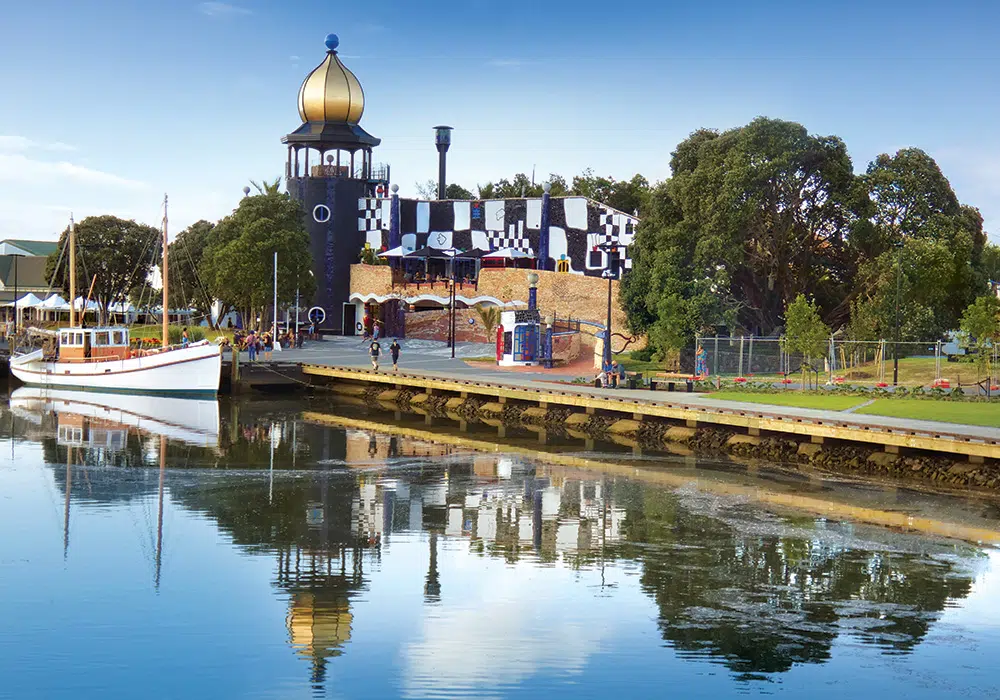
This February saw the long-awaited opening of Whangārei’s Hundertwasser Art Centre. It’s a lot more than your average gallery – it’s a very original experience of art and nature in perfect harmony. The space includes the Wairau Māori Art Gallery, and the centre is housed in a massive, eye-catching and unique example of Hundertwasser’s architecture.

Austrian-born artist, architect and conservationist Friedensreich Hundertwasser first visited New Zealand in 1973, buying land in the Bay of Islands three years later. He was already well known in Europe for his conservation beliefs and quirky architecture, and it didn’t take long before he began applying his art and ideals here. In 1974 his first Conservation Week poster highlighted the need for the protection of our natural environment, and in 1983 he gifted the green and white unfurling fern koru flag, which he designed as an alternative design for our national flag, to New Zealand.

In 1998 Hundertwasser was invited to design an art gallery for Whangārei by the then mayor, Stan Semenoff. Twenty-four years later, the gallery and building have become a reality, a fantastic asset for Whangārei and a lasting tribute to Hundertwasser, who died in 2000 and is buried at his Hundertwasser estate in Kawakawa.
Hundertwasser art centre
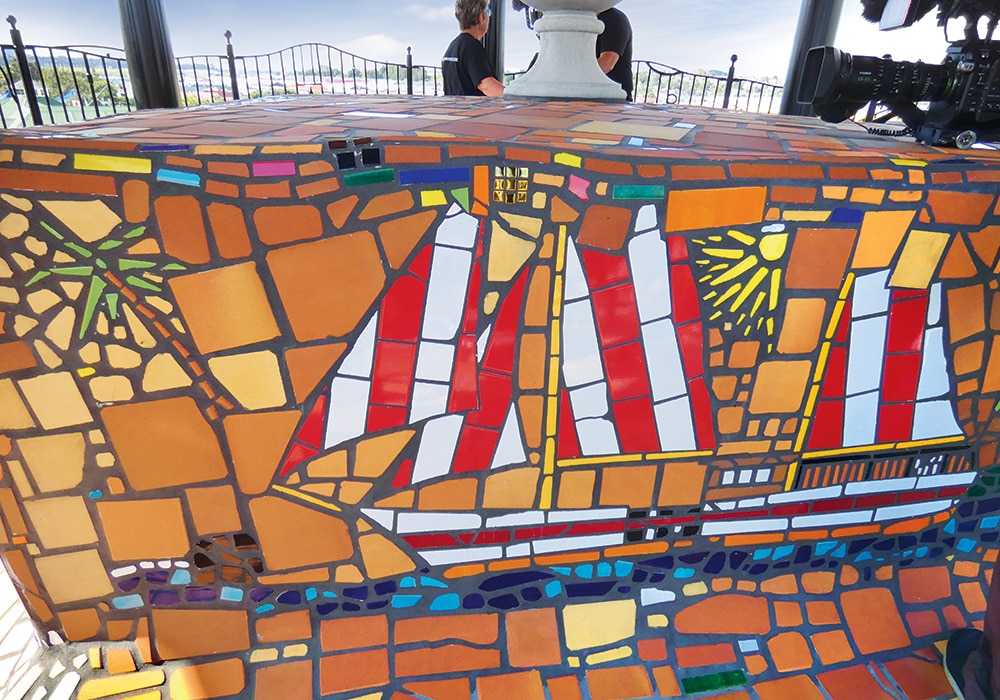
REGENTAG, THE BOAT FRIEDENSREICH HUNDERTWASSER SAILED TO NEW ZEALAND

Building an icon

The Hundertwasser Art Centre building is a piece of art in its own right. Topped with an eight-metre tall, 3.5-tonne, $50,000 gold leaf cupola, it has an afforested rooftop, curving architecture and eye-catching mosaics. A crowd of more than 1000 gathered to watch it being craned into place after being barged upriver last year, and since then it has drawn locals and visitors alike to watch the building and landscaping draw to completion.

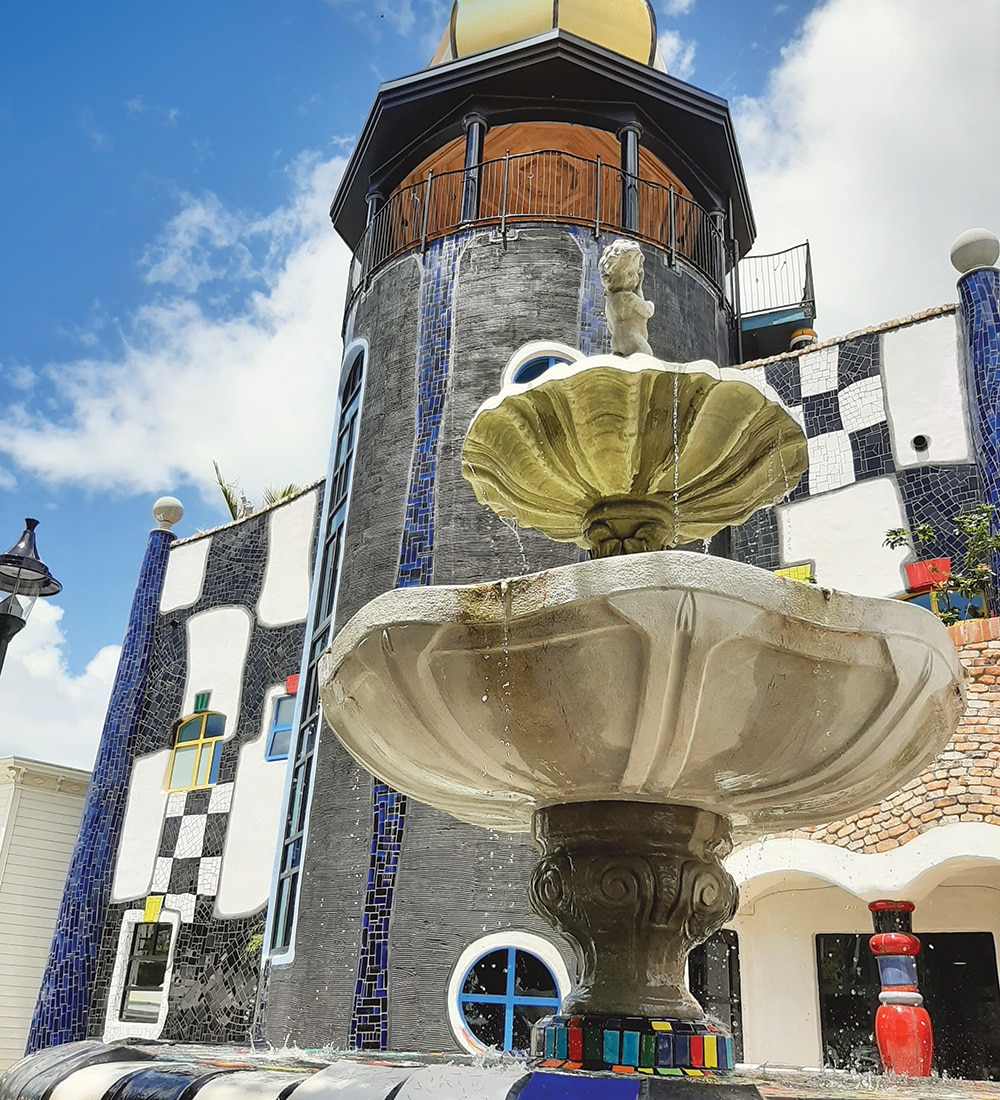
Hundertwasser was very influenced by nature, and believed straight lines in architecture were soulless, that buildings should give back to nature by having afforested roofs. As a result, more than 4000 trees, including rare and native species, have been planted on the building’s roof. Honouring Hundertwasser’s principles, the building has used 40,000 recycled bricks, 5000 recycled pavers and 3000 square metres of locally made tiles. Mosaics on the mainly black and white exterior have icons such as waka and kiwi incorporated into their designs; it’s for kids and adults alike to walk around and spot them. The building faces Whangārei’s Town Basin Marina and links to it by new landscaping, featuring an undulating tiled area with koru shaped mosaics, a European-style fountain and quirky sculpture.

Opened last year, the Aqua Café and Restaurant is situated on the building’s first floor. While having a coffee, lunch or dinner here, you can look down on the yachts in the basin from the outside area or enjoy more Hundertwasser- themed art and architecture inside. Even the café’s toilets are embellished with curves and mosaics.
Hundertwasser art centre
OPULENCE AND CURVES MAKE FOR SOME DRAMATIC ARCHITECTURE
Hundertwasser art centre
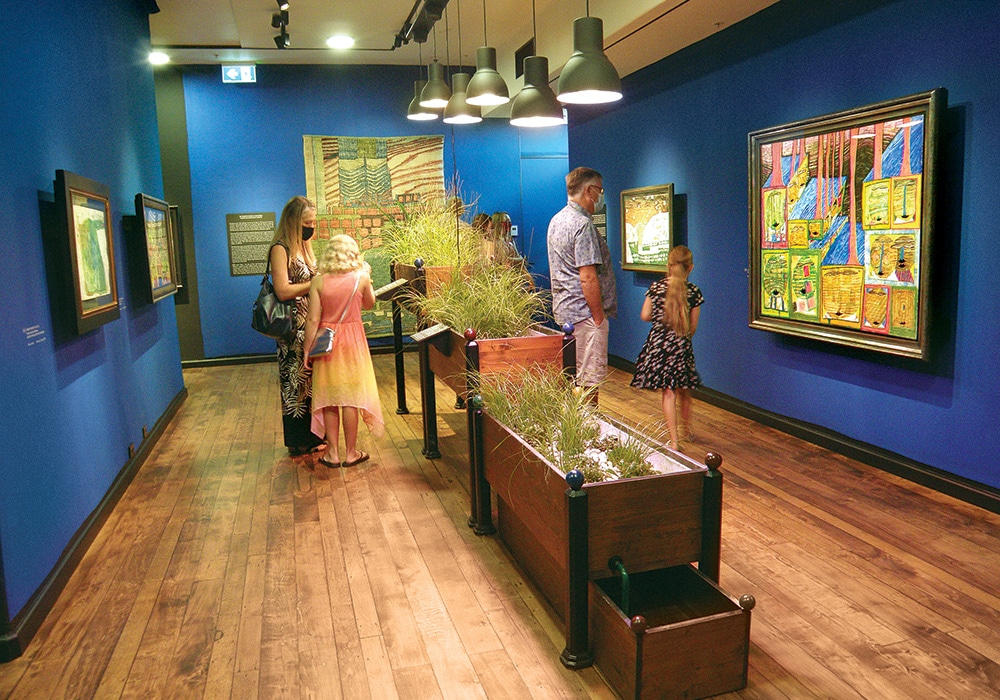
EXPLORE HUNDERTWASSER GALLERY ARTWORK INSIDE AND OUT

A gallery of galleries

Inside the building are two art galleries: the Wairau Māori Art Gallery on the ground floor, while on the first floor is a large exhibition, Hundertwasser In New Zealand 1973-2000.

The Wairau Gallery is New Zealand’s only gallery featuring nationally and internationally recognised contemporary Māori art. Wairau in te teo Māori means One Hundred Waters, as does the name Hundertwasser in German: both names were chosen for their symbolism (Hundertwasser’s surname was originally Stowasser; he changed it at the end of WW2 as his mother, Elsa, was Jewish).

Up a staircase decorated with mosaics, the Hundertwasser gallery encompasses the Viennese-born artist’s life and works. There are photographs, architectural models, tapestries, posters and original artworks. There’s also a composting toilet, illustrating Hundertwasser’s environmental stance.

A spiral staircase leads to the rooftop garden and the cupola. The views of the surrounding landscaping and across the river are beautiful. The garden has seating and is a peaceful oasis in the city.

For something completely different, head to Whangārei Art Museum beside the Hundertwasser building. This gallery is home to Whangārei’s art collection, holding both heritage and contemporary works. The museum also curates exhibitions from Northland, New Zealand and the world. Current exhibitions are Machine in the Garden (until 4 May) and the amazing Life Puzzle, an insightful observational comedy by Whangārei-born artis Nick Austin (until 10 July).
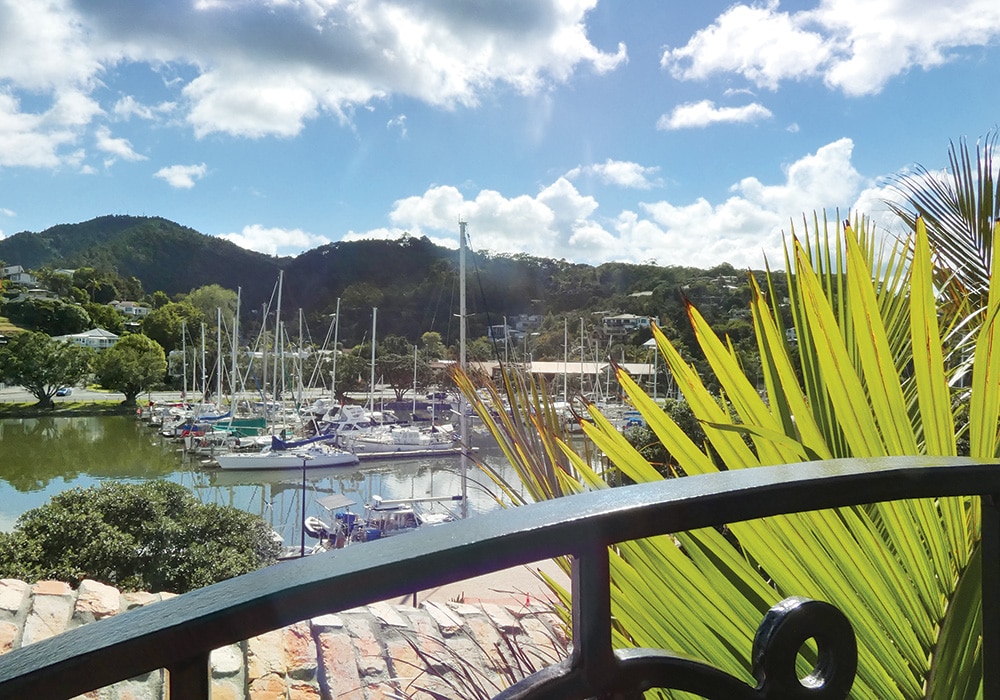

Hundertwasser art centre
THE ROOFTOP GARDEN BOASTS STUNNING VIEWS ON THE HARBOUR

World Famous in New Zealand

The small town of Kawakawa is just over half an hour north of Whangārei. In 1998 Hundertwasser worked with the Kawakawa community to build the toilets that have become the town’s major tourist attraction. With Hundertwasser’s trademark wavy lines, coloured glass and ceramic tiles, it’s one of the few toilet blocks in the world that is seen as a work of art. True to his ideals, recycled materials such as glass bottles and bricks from the former BNZ branch were used, and a living tree grows through the structure. The toilets have a ‘green roof’, where vegetation removed during construction has been rehomed. The toilets are fully functional but many more people enter to look and take photographs than to actually use them.

Joining of hearts

Kawakawa’s cultural hub, Te Hononga Hundertwasser Memorial Park, is adjacent to the toilets. The design of the centre’s building is two hearts coming together, symbolising the community and Hundertwasser, Māori and Pakeha, visitors and residents.

Te Hononga came into being after a trust was formed in 2009 to preserve Hundertwasser’s legacy in Kawakawa. As well as caring for the toilets, a park was established and in 2020 the cultural hub building was opened. The building houses the library, a council service centre, the Hundertwasser Memorial Interpretive Centre, and upstairs a gallery of his art.
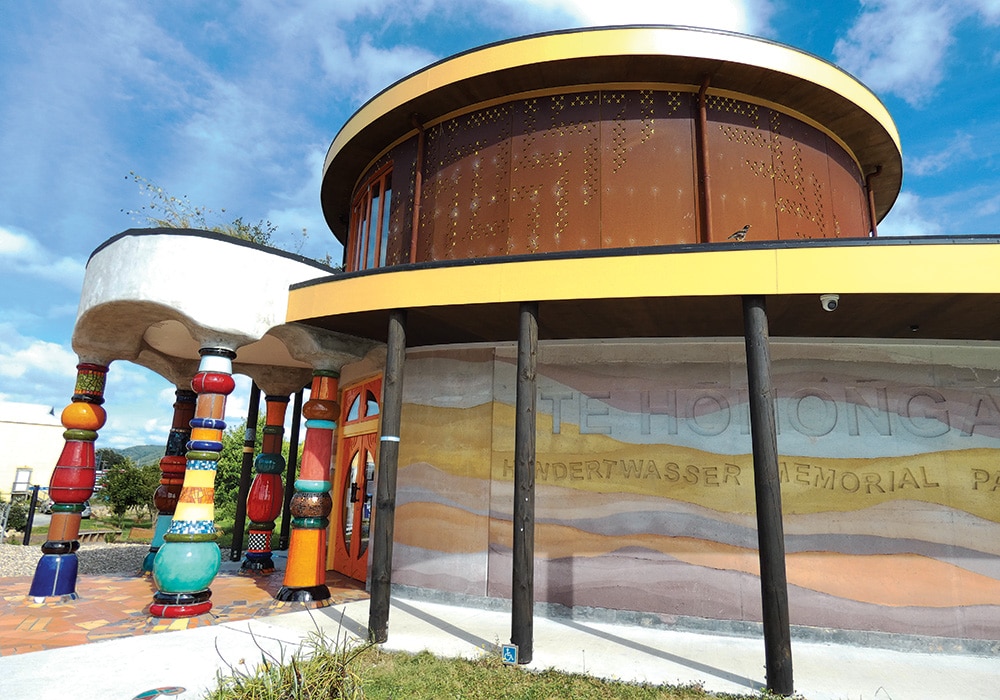
Kawakawa Hundertwasser centre
AN IMPRESSIVE ENTRANCE TO KAWAKAWA’S HUNDERTWASSER CENTRE

Showered with art

Behind the Te Hononga building there is a big area for parking, including overnight freedom camping. What’s fantastic about this site is that the toilets and showers, located on the outside of the building, are decorated in true Hundertwasser style so you can admire your surroundings as you freshen up.

Across the road there’s the Grass Hut, a shop selling Hundertwasser prints and books as well as New Zealand arts
and crafts. It’s in keeping with the area as it has brightly coloured, Hundertwasser-inspired pillars and a living roof. Next door,
39 Gillies Cafe has mosaic tiling, funky sculptures and a view of the famous toilets.

A worthwhile side trip

Russell Road is about halfway between Whangārei and Kawakawa. If you take this turn, it’s about 15 minutes’ drive to Helena Bay Gallery and Café. The gallery showcases New Zealand artists, many of whom are Northland based. You’ll find paintings, hand-made furniture, sculpture, glass, ceramics, jewellery and more. Outside there’s a pond (listen out for the frogs) and a sculpture garden.

The adjacent café must have one of the best views around. From the outdoor deck area,bush-clad slopes lead down to the coast where the sea stretches to the horizon. It’s a great place to relax while taking a break from exploring Northland’s amazing art galleries.
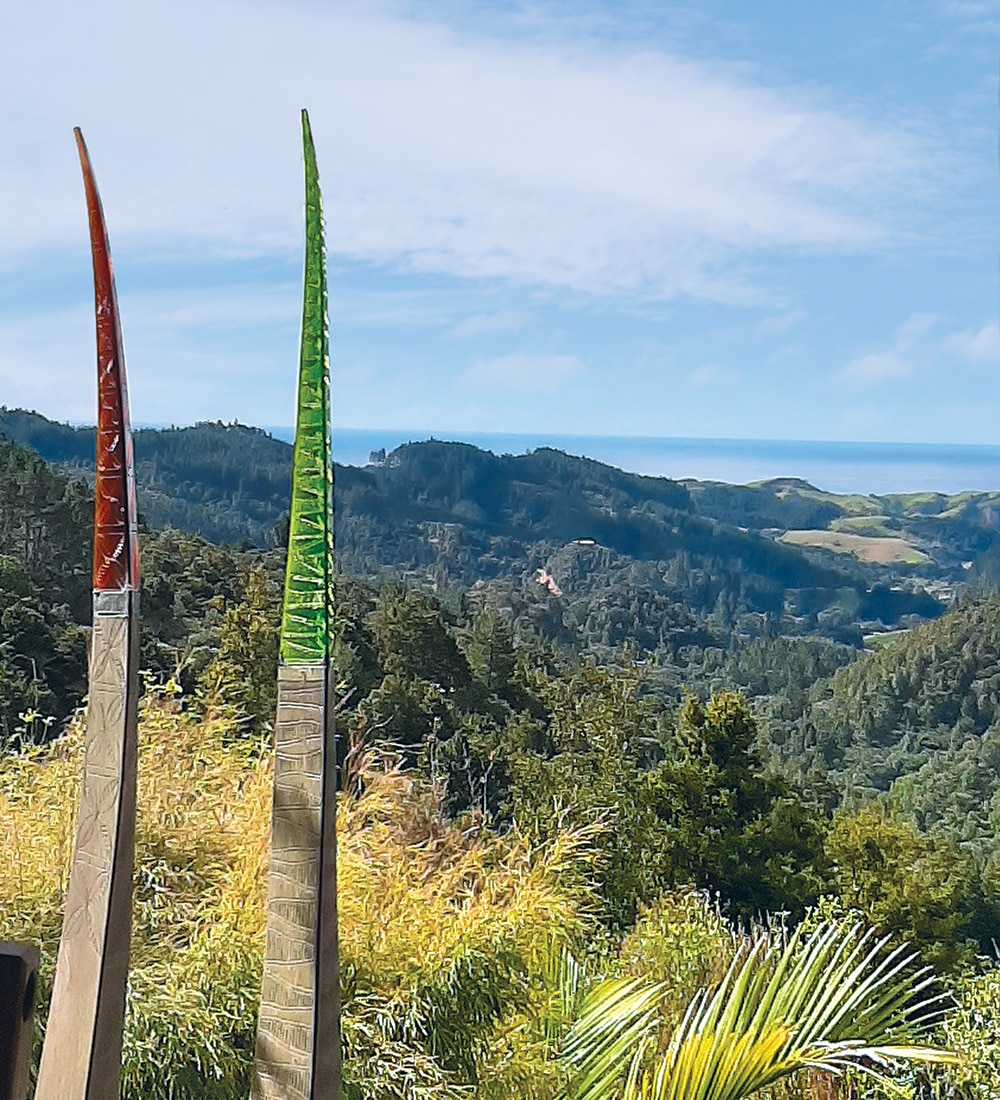
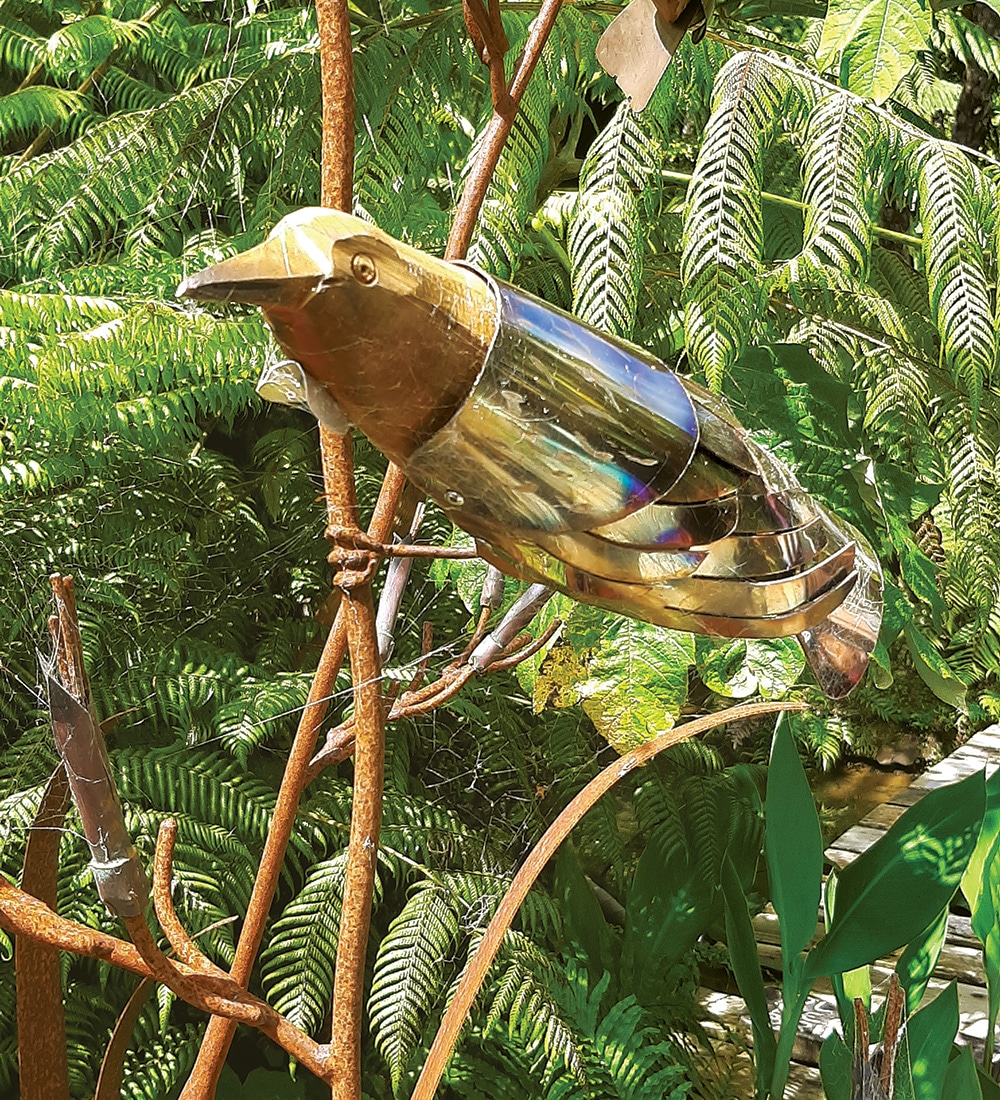
Helena Bay gallery cafe
TAKE A MINUTE AT THE HELENA BAY GALLERY CAFE
Helena Bay sculpture
ALL IS NOT AS IT SEEMS AT THE HELENA BAY SCULPTURE GARDEN

Further Information

There are many other galleries to discover in Northland. Some others in Whangārei’s Town Basin area are Reyburn HouseBurning Issues and Hihiaua Cultural Centre, while across town there’s the Quarry Arts Centre.

Useful websites: For further information about the Hundertwasser Art Centre; for Kawakawa’s Te Hononga; for Whangārei Art Museum.

For details about Helena Bay Gallery and Café: galleryhelenabay.co.nz and helenabaycafe.co.nz

Saturday, 20 June 2020

Loving the Loop - Whangarei

This is my last article In Motorhomes, Caravans & Destinations Magazine
From clocks to cafes, markets to boat trips there’s something for everyone at Whangarei’s Town Basin and along the riverside walk known as ‘The Loop’
the-loop-whangarei-Whelan_8-At-the-Town-Basin.jpg
There are some options for lunch around Whangarei’s Town Basin
Whangarei’s Town Basin has long been a favourite destination for locals and visitors alike. There are shops, galleries, restaurants, and cafes housed in colonial-style buildings overlooking the marina. As well as Whangarei-based boats, there are ocean-going yachts moored in the basin, as international visitors sit out the Pacific hurricane season, or decide on a longer stay. Even though I’m a local, I always find something new going on Quayside and along the Hatea Loop.
First stop for visitors should be Te Manawa, The Hub. This building is one of Whangarei’s information centres and the staff have a wealth of local knowledge. There are lots of maps and brochures to peruse – I picked up the latest visitor guide as I felt I should learn more about the places and sculptures I walk past so regularly.
the-loop-whangarei-Whelan_5-At-the-Town-Basin.jpg
A lovely spot to stop and admire the scenery

Inspired architecture

The Hub is more than an information centre; it also houses Whangarei Art Museum Te Manawa Toi. The gallery curates a variety of exhibitions, as well as displaying art from its collections. Entry is by donation and it is well worth a look.
On this occasion though, I was drawn to the colourful, funky model of Whangarei’s newest building project, the Hundertwasser Art Centre with Wairau Maori Gallery (HAC). Admiring the organic form of the architecture, I was reminded that the Hundertwasser Centre will be radically different to the surrounding architecture. When completed it will be a unique feature in Whangarei and is expected to draw visitors from around the country and overseas.
Outside on Quayside I wandered up the spiral ramp inside the folly building called Te Kākano (The Seed). It is a little koru-shaped building, something like a tiled lighthouse with round windows and ball-topped pillars. It was built in 2016 as a precursor to the 100-times bigger HAC development behind it. From the top I peered across the building site and tried to imagine the completed structure.
the-loop-whangarei-Whelan_7-At-the-Town-Basin.jpg
Specialty shops beside the water

Gorgeous galleries

Along the pedestrianised Quayside there are a cluster of speciality shops and galleries. The Bach sounds suitably seaside-like but its name is actually an acronym – Basin Art and Craft House. Every item on sale here is produced locally but don’t be misled, this isn’t an amateur set up, the Bach Gallery sells quality products with a Northland vibe.
On the waterfront nearby I checked out Burning Issues Gallery. As well as being able to browse and buy handmade glass, paintings, jewellery and ceramics, visitors can watch glass blowing from a viewing platform at the rear of the shop. Glass artist Keith Grinter also holds beginners’ workshops.
the-loop-whangarei-Whelan_3-The-Seed.jpg
Te Kākano(The Seed)

Dining beside the river

From a casual ice-cream on a hot day, or dining with the water lapping beneath your feet, there are plenty of options at the basin. There are cafes with courtyards and shady sun umbrellas, where you can grab a coffee or enjoy a lazy lunch watching the activity on the water.
The Fudge Farm is everyone’s idea of an old-fashioned sweet shop, its shelves packed with varieties of fudge and other sweet treats. Started in a farmhouse kitchen using a family recipe, the Fudge Farm shop is a popular spot – and not only with the children. As well as fudge, you can enjoy espresso, cool drinks, ice cream and desserts on the tables outside. I chose one of the delicious ice cream options to enjoy while I looked around at the nearby restaurants.
the-loop-whangarei-Whelan_2-Boats-at-the-Town-Basin.jpg
The Town Basin marina is a haven for the yachting community
Next door, No 8 Restaurant and Bar provides dining in a stunning hexagonal-shaped building. It has a white-painted, balustraded balcony on the second floor and is topped by a little tower. But arguably the best location for brunch or dinner is at the Quay, where the restaurant’s deck is right over the Hatea River.

Messing about on the river

Not only can you sit and admire the yachts, but out on the water there’s the option of hiring an aqua cycle or kayak and, on summer weekends, the MV Waipapa offers cruises along the harbour to Matakohe-Limestone Island. Once home to a thriving industrial village with a post office and school, the island is now a nature, scenic and kiwi reserve.
the-loop-whangarei-Whelan_9-Claphams-Clock-Museum.jpg
Claphams Clock Museum

For the kids

Ice cream finished, I set off to walk the loop. At the start of the walkway another unusual building houses Claphams Clock Museum. This museum is home to the largest collection of timepieces in the Southern hemisphere, everything from rare antiques to fun and strange clocks. It’s a great place to take kids.
Outside there’s a huge sundial, and beside it an area of grass destined to be home to a rolling ball clock.Unsure what this was, I followed the signs to a nearby workshop where I discovered the About Time Project. Volunteers have been working for several years to create what looks like a giant marble-rolling toy. In reality, this kinetic sculpture is an accurate timepiece and an amazing piece of engineering. I don’t claim to understand how it works but I stood mesmerised by the rolling balls and clicking cogs. The enthusiastic builders are fundraising so the rolling ball clock can be moved to its new home beside the river. 
the-loop-whangarei-Whelan_12-Reyburn-House.jpg
Reyburn House

Markets and more

Back on the brightly painted wooden walkway, children were having the time of their lives on a popular adventure playground. Just beyond the play area is Whangarei’s oldest house. A true colonial gem, white-painted Reyburn House is surrounded by a pretty cottage garden and is a gallery for local artists. During the summer, this grassy area is the venue for markets. On Saturday mornings there is a craft market with stalls full of artwork, handmade soaps, garden art and much more. There’s a coffee caravan and live music if you just need to sit and chill for a while. On Friday evenings foodies gather at the night market where stalls sell multicultural cuisine.

Walking the loop

The Hatea Loop Walkway Huarahi o te Whai runs for 4.2km from the Town Basin (or other points along its length) crossing bridges and linking both banks of the Hatea River. It’s about an hour’s stroll, and is a shared path, so watch out for cyclists.
Heading south from the Town Basin, the walkway leads past 16 different sculptures. These range from quite small to enormous and are constructed from diverse mediums, from marble to steel pipe.
Outside Reyburn House I admired Lottie by Kap Pothan, commemorating the first child born to the Reyburn family.
the-loop-whangarei-Whelan_20-The-gypsy-fair-market.jpg
The gypsy fair market
A contrast is Kaitiaki, a two-metre-tall guardian figure carved by Manos Nathan. Probably the most eye-catching sculpture is Chris Booth and Te Warihi Hetaraka’s Wave and Waka sculpture, featuring an enormous stone wave suspended above a canoe. This celebrates the history of the site as a landing place for Māori and European alike. Information panels relating the history and mythology of the area can be found beside the path.
The next section of the loop walk took me over a footbridge, Kotuitui Whitinga, which is sculptural in itself and studded with paua. This bridges the Raumanga Stream, which empties into the river at this point. On the right, the Pocket Park is another entrance to the loop. The Pocket Park, and Bascule Park close by, have been recently developed and feature murals and attractive plantings. Bascule Park has motorhome parking and a pop-up cafe.
the-loop-whangarei-Whelan_21-Mural-on-the-loop.jpg
Mural on the loop
One of the most photographed parts of the loop would be the award-winning Te Matau ā Pohe (the fish hook of Pohe) bridge. The design is inspired by the shapes of Māori fishhooks and waka prows. This bridge across the Hātea River opens to let yachts pass through on their way to the Town Basin Marina.
The loop walk continues along the far side of the river, past the site of another upcoming project, the camera obscura. This 8-metre structure will be an interactive sculpture which promises to give visitors unique views of the surroundings.
The final stretch of the walk passes beside the William Frazer Memorial Park, home to a skateboard park and a BMX track. The park is also the venue for the circus and the Gypsy Extravaganza Fair when they make their annual visits to Whangarei. On Hatea Drive walkers pass a small marina and cute boathouses, before coming to my favourite coffee stop. Tiny Kafe, tucked at the back of a surf shop by the marina, has a courtyard shaded by a huge old pohutukawa. It’s a great spot to watch all the activity on the other bank before wandering back beside the river and over the Canopy Bridge, its awnings designed to look like sails.
the-loop-whangarei-Whelan_18-The-Pocket-Park.jpg
Pocket Park

FURTHER INFORMATION

There are two places for motorhomes to park beside the loop. Bascule Park has eight designated places for non self-contained vehicles (there are toilets at the park). Self-contained vehicles can stay at the car park on Reyburn House Lane. There is a maximum of three nights at both spots.
Te Manawa The Hub Information Centre is open seven days: Monday-Friday 9.00am-5.00pm, and 9.00am-4.30pm on weekends.

Friday, 14 February 2020

Whangarei's Street Art


Whelan 6 Manaia by Mateus Bailon


This is my latest article in Motorhomes Caravans and Destinations Magazine
Heather Whelan takes a closer look at Whāngārei's street art

Last year, Whāngārei hosted an international arts festival, Street Prints Manaia, where artists painted 15 large-scale murals around the city. The theme was ‘tuia te muka tāngata’ - weaving the threads of humanity - and the artists interpreted this in various ways.
After downloading a map of the murals’ locations, I spent a couple of hours wandering around Whāngārei, discovering and admiring the large paintings. Some artworks were rendered powerfully in black and white while others were painted in vivid colours.
People and animals were represented, either realistically or in abstract or fantastical ways. The artists themselves came from as far away as Brazil and Italy, though a few were homegrown. One of my favourite works was by Whāngārei artist Earnest Bradley, who was a driving force behind Street Prints Manaia.

Beautiful Bridges

When tracking down the murals, I became aware of a variety of other artworks that have appeared in the city. Walking beneath two of Whāngārei’s rail bridges, there are huge murals, painted as part of Resene’s Mural Masterpieces Competition. On Rust Avenue, Trent Morgan and helpers painted a variety of symbols linked to the city.
On one wall, the blocks of colour suggest weaving, the blue and green used on the other side show the profile of Whāngārei Heads. Jasmine Fuller’s depiction of Northland’s flora and fauna on the Water Street Bridge are based on the theme of turning to nature for inspiration.

Funky Artwork

Alt TEXT HERE
Unity by Earnest Bradley
The Austrian artist Friedensreich Hundertwasser has had a significant influence on Whāngārei. The Arts Museum Trust is behind the building of a Hundertwasser-inspired gallery at the Town Basin, and there are themed works all around the city.
On Rathbone Street, a face with a moko kauae (chin tattoo) looks out from an artwork inspired by Hundertwasser’s Irinaland Over the Balkans, while around the corner, students from a local primary school have their pictures displayed. Their art was enlarged and made permanent by the team at bepartoftheart.co.nz.
Alt TEXT HERE
TuiaTe Muka Tangata by Charles and Janine Williams
There’s more art to be found along ‘the Loop’, Whāngārei’s waterfront walkway. Earnest Bradley is responsible for the bird pictures on the toilet block as well as the children depicted having fun on the other side of the river. Mike Tupaea and Charles Williams are two other local mural artists; their works can be seen at the Pocket Park that links the walkway to the shopping centre at Okara.
A whale, birds and kites are all part of the murals that represent Māori mythology related to the area. And then there are the murals decorating businesses around the city. At the Town Basin, there’s a beautiful work adorning the walls of Clapham’s Clock Museum painted by artist Steve Pike, while at Laurie Hall Park, flowers adorn the walls of Mint Floral, a florist shop.
The mural was painted by Jasmine Fuller (also responsible for one of the bridges) and her partner Bryce, who own the business. There are many more murals to be found, seemingly around every corner. Even the council building, Forum North, has new panels outside. Whāngārei’s street art is worth checking out.

When you’re visiting Whāngārei, why don’t you... go for a cycle?

Whāngārei’s cycle network expanded with the opening of the shared path section from Kensington to Kamo. Leave from opposite the library on Rust Avenue (where you can use the internet, get a drink at the café and admire the 10 carved pou representing Māori, Celtic, Pacific Island, Korean and Dalmatian cultures).
The 6.5km of path takes riders (or walkers) past parks, schools and shops out to the city fringes. Another good ride is around the Hatea Loop, which goes from the Town Basin beside the Hatea River. A side-trip from the Loop Track turns at the Te Matau a Pohe opening bridge and takes riders along a 6km off-road section to Onerahi.
After trailing beside the river, the track goes uphill and connects to the Waimahanga Track. (There is a car park on Waimahanga Road for those who want to cycle this section only.) Gum trees and banksias line the route along the track, and the surface is red, giving the impression of cycling in Australia. This section was once an old railway line, so it is flat. The next part goes uphill then down to the harbourside at Onerahi.

Further Information

  • A printable map of the murals created as part of Street Prints Manaia can be found at whangareinz.com
  • There are places for motorhomes beside the Loop Walkway — Bascule Car Park on Port Road (for non-self-contained vehicles) and Finlayson Street Car Park (self-contained)
  • A downloadable brochure outlining freedom-camping areas in the Whāngārei district is at wdc.govt.nz

Looking for other fun things to do in Whāngārei? Here are a few suggestions.

Climb a mountain
Mair Park nestles beside the Hatea River in central Whāngārei. There is a river walk from the Town Basin to Whareora Road that takes about an hour but, if you want a view, go up one of the two tracks that lead to the mountain’s summit.
Parihaka is a bush-covered former pā site, and it takes between 40 and 50 minutes to reach the top. The views over the city and along the harbour from the 240m summit are amazing and well worth the climb.
Check out a Kauri
A.H. Reed Kauri Park has been a reserve for 130 years and is named after the naturalist, writer and long-distance walker. Raised boardwalks take you over streams, through the forest canopy and around the bases of mature kauri trees, some 500 years old. There are two loop walks here, taking between 15 and 30 minutes.
Discover a waterfall
Whāngārei Falls is just a few kilometres from the city centre but seems a million miles from any hustle and bustle. It’s a 30-minute loop walk from the car park to viewing platforms on both sides of the river and to the base of the falls.
Whāngārei Falls are stunning, dropping more than 26m over basalt cliffs into a pool at the bottom. There is a footbridge across the river, which is a great spot for admiring the action. It is also possible to walk to Whāngārei Falls from A.H. Reed Park, passing through farmland and native bush.

Saturday, 23 November 2019

Whangarei's Hidden Delights

An article published in Motorhomes caravans and Destinations Magazine
Tucked away in Whangarei’s Western Hills are two hidden gems: old quarries given a new lease of life and linked by a pretty bush walk. Heather Whelan goes exploring.

Garden oasis

A fluttering flag at the roadside marked our turn from Western Hills Drive onto Russell Rd. A few twists and turns, then we saw a parking area (an overflow from the main car park and suitable for large motorhomes).
A short distance along a bush-lined driveway was Quarry Gardens, a subtropical oasis in what was once a stone quarry. Beside the main car park a modern building nestled into the foliage, its design echoing the industrial heritage of the site – many remnants of its stone-quarrying past are integrated into the gardens.
This building housed the Visitor’s Information Centre and Quail Cafe. Over a bridge and inside the building we were tempted to stop for a coffee but decided to explore the gardens first.
Signage outside the building explained some of the history of the gardens. We learned that in the 1940s the quarry was an industrial site and, after its closure in the ‘70s, the land became little more than an overgrown rubbish dump.
Twenty years later, a far-sighted local called Laughton King had the dream of establishing gardens there. The council, who owned the land, came on board and a group of volunteers began the task of clearing the site and establishing a garden.
Now the 24 hectare site is home to a variety of native and exotic plants and is bounded by native bush. As we gazed round we realised the gardens were landscaped within a natural amphitheatre: the hillsides rose steeply – with steps leading up in places to tracks that encircled the gardens.
Alt TEXT HERE
The old stone quarry has been transformed
We wandered first through the ‘five senses garden’ where we were encouraged to smell, touch, listen and look at the mainly subtropical plants – but not to taste! We were asked to take photos instead.
Winding paths led us past a bromeliad area, studded with orchids, and on to a camellia collection. Many of the 115 varieties donated to the gardens, are unique to the Quarry Gardens, in that they are not to be found in other public gardens anywhere in the world. This must be a Mecca for camellia buffs.

Exotic fauna

We couldn’t help taking photo after photo of the strange and exotic plants. There was a tree with huge thorns growing from its bark. It was called the silk floss tree, which sounds much more benign than the sharp prickles would lead you to expect.
A native of tropical South American forests, it has a cotton-like fibre in its seed pods. Nearby an Australian Burrawang, a cycad dating back to dinosaur days, thrust palm-like leaves skywards, and a chili plant from the Andes came with a warning – its peppers are extremely hot.

Locals to the rescue

At the rear of the gardens a waterfall dropped 40 metres into a man-made, but natural-looking, lake. We took a track to the top of this waterfall and looked down at the gardens spread beneath us. From this vantage point we could fully appreciate the amount of work that has 
gone into establishing and maintaining the gardens. Whangarei Council passed responsibility for the gardens to the Whangarei Quarry Gardens Trust back in 2000 and volunteers meet weekly to tend the gardens and establish new areas.
The local community is justifiably proud of the gardens. This was demonstrated after an arsonist set fires on the hillside around the gardens in 2005. in just one day,10,000 native trees were planted by by 250 volunteers to help revegetate the slopes.
As we walked back down to the cafe for a welcome snack we noticed school children had left brightly painted, concrete-filled gumboots beside plantings of kauri trees that line one of the pathways. They had environmental messages written on them, illustrating that you are never too young to treasure your surroundings. 

Funky shapes

Alt TEXT HERE
At the Sculpture Northland exhibition, Quarry Gardens
Near the cafe we stopped to admire a sculpture. Created by Chris Booth, the towering wood and stone ‘goddess’ named Varder V, has been designed to slowly decompose and alter over time.
On another occasion we visited the gardens to admire the varied works by local artists and sculptors as part of the Sculpture Northland exhibition. Tucked in among the plantings were everything from dragons to a feline ‘terracatta’ army.

A space for artists

The Quarry Arts Centre, further along the Western Hills, has been a hub for the art and craft community since the 1980s. We drove past a funky mosaic guardian sculpture at the entrance and parked outside the Quarry Cafe.
Unlike the popular Quail Cafe at the Quarry Gardens, this little cafe had a much more hippy vibe. With seating inside for four, while six can sit outside, it must be Whangarei’s tiniest cafe. 
The Arts Centre itself was the brainchild of the late potter Yvonne Rust, who founded the trust. A gallery was first opened in 1984. After a rebuild in 2011, it is now known as the Yvonne Rust Gallery and has regularly changing exhibitions.
Alt TEXT HERE
We admired the quirky and curious creations in the Grate Plate display. Opposite the gallery we discovered the Quarry Craft Co-op Shop, where we browsed handmade treasures in glass, leather, pottery, greenstone and textiles.
I couldn’t resist some glass earrings, knowing they were unique. Dotted around the quarry were slightly ramshackle – almost organic – buildings: homes and workshops for the artisans who thrive at the Arts Centre.
Quirky sculptures, examples of the artists’ work, could be seen outside the buildings and in gardens. Seeing a sign advertising an upcoming market, we made a note to check it out.
This was an event not to be missed. Live jazz was issuing from the veranda outside the gallery and the area was crammed with stalls selling ceramics, glassware, garden art – there was something for everyone and the Arts Centre was the perfect backdrop.

A bush walk

Alt TEXT HERE
The start of the walk through the Coronation Reserve
Behind one stall we spotted the start of a walkway and decided to investigate further. This was an entrance into the Coronation Reserve, a stand of native bush in the Western Hills, named to commemorate the coronation of King George V, and with tracks that link both quarries.
We couldn’t resist exploring, so set out from the Quarry Gardens one sunny morning a while later, and followed a track up and into the hills. A turn led into the Coronation Reserve where we walked along the Frank Holman Track, marveling that we were so close to the city yet deep in bush.
Before dropping down into the Quarry Arts Centre we took a side track for a look at a pa site. From here we could get peeks down into Whangarei. Then, after another look around the Quarry Arts Centre, we retraced our steps and rewarded ourselves with lunch at the Quarry Gardens.

Further information

  • The Quarry Gardens are at 37A Russell Road, Whangarei. The gardens are open 7 days, 9am - 5pm. Quail Cafe is open Wednesday - Sunday, 9am - 3pm.
  • The Quarry Arts Centre is at 21 Selwyn Avenue, Whangarei. The gallery is open Monday to Saturday, 9.30am - 4.30pm. The cafe is open Monday - Friday, 10am-2pm.
  • Information about the tracks in the Coronation Scenic Reserve can be found at wdc.govt.nz. You can also find a downloadable and printable map on this website.